



The Top Of Language Obstacles? How Earbud Translators Are Changing Wor…
페이지 정보

본문
 Here is a weblog post exploring the concept of the earbud translator.
 You understand the feeling. You’re standing in a bustling market in Tokyo, a cozy café in Paris, or a chaotic prepare station in Mexico City. You see one thing you need, it is advisable to ask for instructions, or you’re attempting to tell an area how stunning their metropolis is. You open your mouth, and the words simply don’t come out.
For many years, the "Tower of Babel" downside has been a defining problem of worldwide journey. We’ve relied on clumsy phrasebooks, frantic charades, or the hope that the particular person standing in entrance of us speaks a little bit English.
But what is the best translating earbuds - to-Portal.com, if you might slip a small machine into your ear and have a private, real-time interpreter sitting right beside you?
That’s now not science fiction. Welcome to the age of the earbud translator.
What Precisely Is an Earbud Translator?
At its core, an earbud translator is a wearable device that combines two highly effective applied sciences: speech recognition and machine translation.
Not like your normal Bluetooth earbuds used for listening to music, these specialised devices are designed to take heed to the world around you. Here’s the magic step-by-step:
- Seize: The microphone picks up the voice of the particular person speaking a overseas language.
- Transcribe: The system makes use of AI to convert the spoken words into text.
- Translate: That text is instantly processed by means of a translation engine.
- Ship: The translated text is converted back into audio and performed in your ear—either as a synthesized voice or, in some cases, translated captions displayed in your smartphone.
The result? A conversation flows nearly naturally, with solely a slight delay, bridging the hole between two different languages.
The Tech Inside: More Than simply an App
Whereas apps like Google Translate have been around for years, placing this technology into an earbud solves a major UX problem: friction.
With an app, you've gotten to carry your telephone up, press a button, communicate into it, wait, after which present the display screen to the opposite particular person. It’s clunky and sometimes feels impersonal.
Earbud translators offer a hands-free, "ambient" expertise. A few of the preferred fashions on the market right now embrace:
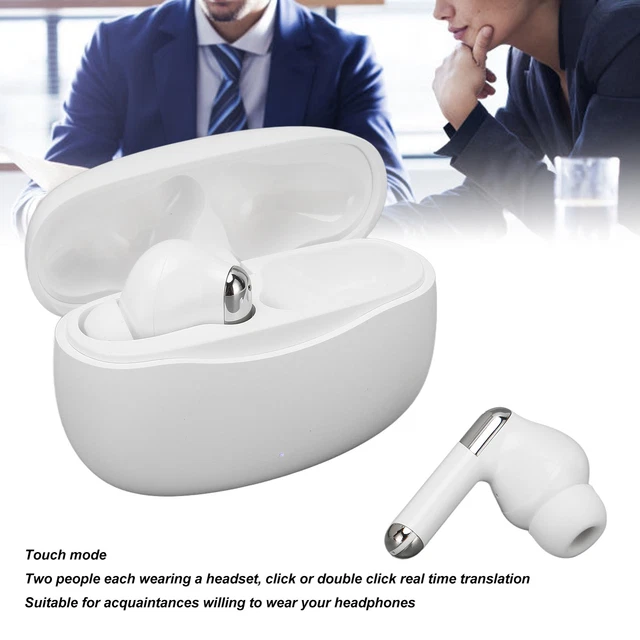
- Timekettle: Known for his or her sleek designs, they provide units just like the WT2 Edge and M3, which allow for pure, bidirectional dialog. One particular person wears one earbud, you wear the opposite.
- Bud: A newer contender that focuses on actual-time translation immediately from the bud, typically built-in with a smartphone app for better accuracy.
- Google Pixel Buds (with Google Translate): Whereas not dedicated translators, the mixing of Google Translate in their ecosystem permits for impressive real-time dialog mode.
Why This Modifications The whole lot
1. Genuine Travel Experiences
If you depend on pointing at menus or staying in vacationer-heavy areas where English is spoken, you’re lacking the guts of a culture. Earbud translators assist you to step into a neighborhood bistro, order a dish primarily based on the server’s suggestion, and truly understand the substances.
2. Enterprise on the Go
For digital nomads and worldwide business travelers, these units are game-changers. As an alternative of waiting for a human interpreter or counting on e mail, you can negotiate offers, clarify contracts, and build rapport face-to-face in real-time.
3. Social Connection
There is a profound emotional difference between reading a translation on a display and hearing it spoken in your ear. It seems like a dialog, not a transaction. It preserves the nuance, the tone, and the human factor of communication.
The reality Verify: Limitations to Know
While the expertise is spectacular, it’s not excellent (yet). Here are a few things to remember:
- The Connectivity Crutch: Most heavy-lifting translation apps rely on cloud processing. This implies you want a robust data connection. If you’re hiking within the Andes or in a subway tunnel, the translation might lag or fail.
- Nuance and Slang: AI is nice at customary language but struggles with heavy regional accents, slang, and cultural idioms. If somebody uses a local proverb, the translation would possibly come out literal and complicated.
- Background Noise: In extremely loud environments (like a crowded club or a busy street), the microphone might choose up background chatter, resulting in inaccurate translations.
- Battery Life: Operating translation engines requires energy. While you won't get the 30+ hours of a standard earbud, most translator buds supply 3 to 5 hours of steady conversation, which is normally enough for a dinner or a gathering.
The future of Communication
We're at present in the "early adopter" part of this expertise, but the trajectory is obvious. As 5G networks develop and AI fashions (like Giant Language Models) develop into extra sophisticated, the delay will disappear, and the accuracy will turn out to be near-human.
Imagine a future where "language obstacles" are a historic concept—a footnote in historical past books about how people used to struggle to grasp one another. With earbud translators, we are taking a large step toward a more related, understood, and unified world.
Have you ever tried a translation earbud but? I’d love to hear about your expertise in the feedback under!
- 이전글Seriously loads informative tips 26.02.20
- 다음글Заl 26.02.19
댓글목록
등록된 댓글이 없습니다.